


The Children Who Must Hate to Be Loved
The story of a child who was forced to hate — in order to be loved. He managed it until he was 16. Parental alienation pushed him toward self-destruction. An article for all our alienated children.
PARENTAL ALIENATIONNARCISSISTIC ABUSE
Lilika Vergi
4/24/20264 min read
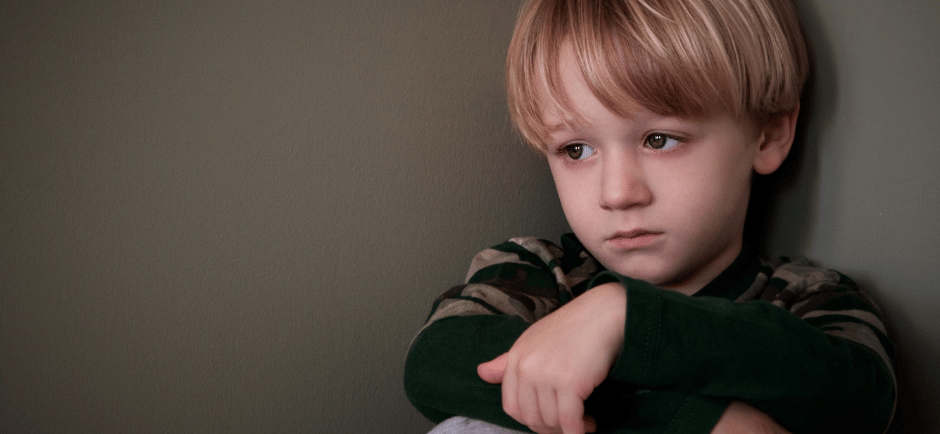
When a child lives through parental alienation, something happens in the silence. It isn't that they stop loving the parent they are being pulled away from — it's that they slowly learn that this love comes with a price. And when a child senses that their bond with one parent threatens their place beside the other, they do what every child does when they feel unsafe: they adapt, in order to survive.
In her book A Kidnapped Mind, Pamela Richardson tells the story of her son Dash — a boy who spent nearly eleven of the most formative years of his life as a psychological hostage in a custody battle he never chose. His story is heartbreaking. But the internal mechanisms Pamela's book describes are not rare — they are the quiet reality of thousands of children around the world.
Dashiell — Dash — was born in Vancouver, the child of Pamela's marriage to Peter Hart, a successful criminal lawyer. The early years were full of light: a warm, loving boy who smiled at everyone, whose mother would make heart-shaped sandwiches and who had his own family hand sign for "I love you" — two hands forming a heart in the air.
But the marriage broke down. When Dash was four, Pamela left. From that point on, his life became a battleground. Peter rejected every mediation attempt and chose the adversarial path through the courts — the most damaging road a child can travel. In 1989, a judge awarded him temporary custody; shortly after, it became permanent and exclusive. Pamela, the primary attachment figure in Dash's life until then, was suddenly required to obtain court permission to see her own son.
The alienation was not a single event. It was a sustained, daily erosion. His father systematically fused his own identity with his son's — speaking in first-person plural ("they're taking us to court," "we are under attack") while framing his mother as the enemy "who wants to invade the castle." Language, school access, doctors, even birthday parties — everything became a weapon. Slowly, the joyful boy began to change: he started to refuse visits, to hide when she came, and — in one image that stays with you long after you close the book — to beg her to leave the field where he used to run to meet her.
For nearly twelve years, Pamela fought. She moved from courtroom to courtroom — six judges in six months at one point — alone and terrified. She litigated over school records, teacher meetings, medical updates. Every victory was small and fragile: when she finally won the right to speak at his school, the principal himself refused to return her calls. In the meantime, she kept writing, calling, showing up, waiting. She built a new family with Dave Richardson, had two more children, Colby and Quinton — but never, not for a single day, stopped looking for her firstborn son.
Dash, in the silence, showed signs of suffocation. His personality shifted dramatically in three years. On Thanksgiving 2001, he got into a physical fight with his father. That night, Dash dressed in layers of clothing — as children who plan to live on the street do, people say — and walked out into the night, toward the Granville Street Bridge, above Vancouver Harbour. He threw his mob cap over the railing, opened the gates with both hands, and jumped. He was sixteen years old. His body was not found for three days — his father began searching on the 3rd of January.
Pamela learned of her son's death through Peter's lawyer, by phone, in a "professional, unemotional" voice. She could never bring herself to watch the news again. Her book A Kidnapped Mind, she writes, is "the final gift" she could give to her son — not in his own voice, but shaped by the struggle of a mother who never accepted that he was gone.
The alienated child is placed in an impossible crisis of loyalty. They are called upon to choose — not logically, but emotionally — between two people they need equally. To survive psychologically within reach of the alienating parent, they do what every child does: they suppress their love for the other. The child doesn't think of this as "hatred" or "rejection" — it's simply what all children do when they feel afraid. They adapt to survive.
The consequences run deep and often go unseen: fragmentation of identity ("who am I, if I hate the half of me that came from her?"), a guilt the child can never name, extreme compliance, diminished capacity for trust, and — later in life — persistent difficulties in close relationships, depression, a pervasive feeling of emptiness. The child's inner truth — their love for the alienated parent — doesn't disappear. It simply goes underground, hidden even from themselves.
As Dr. Reena Sommer notes in the book's foreword, the child is deprived of one of the most fundamental rights a human being holds: to love and be loved by both parents. This deprivation is a form of emotional abuse — as much a matter of psychology as it is of physiology, and as visible in its damage as it is long in its shadow.
Patience that asks for no apology. Consistent presence without pressure. A door that stays open — even when the child is pushing against it from the other side. The love that never makes ultimatums: this is what Pamela Richardson calls the "final gift" she left for her son — and it is, often, the only thread that can hold the child in place until, one day, they choose to find their way back to themselves.
And for the parent who endures this silence: your love is being registered, even when it isn't acknowledged. Children feel the presence that keeps faith with them. It is not wasted — even when it looks that way for years.
To you, my beloved children — if you ever read these words: there is no anger here. No resentment. I know that what you lived through was larger than you. I know that loving me the way you could and surviving the way you had to were the greatest things you were ever asked to do. My love was never conditional — and it never will be — whatever you said or felt or chose. It is here: quiet, steady, yours. And it will be here, whenever you need it.
Source
Richardson, P. (2006). A Kidnapped Mind: A Mother's Heartbreaking Story of Parental Alienation Syndrome. Dundurn Press.
The wounds that begin in our earliest bonds don't mean we're broken — they can be understood, grieved, and repaired.
How I work with this trauma:
My Approach
Related Articles
• The Lost World: The Child, the Parent, the Trauma That Stays
• The Mind and the Tools of the Alienating Parent
If these patterns feel familiar, there is a way through.
Book a Session
A Note From the Heart
What the Child Needs From the Alienated Parent
What Happens Inside the Child that is a victim of Parental Alienation
Dash's Story
Lilika Vergi | Trauma-Informed Counselling & Psychotherapy
Based in Greece, I work online with clients worldwide. Sessions are available in English and Greek.
Phone
© 2026 lilikavergi.com. All rights reserved.
Mobile / WhatsApp
Address