

Divorce Counselling & Family Rebuilding

When a marriage reaches its limits
— and life asks for a new beginning
Being in a marriage that has broken down is one of the most isolating experiences a person can go through. Neither inside nor outside. With feelings that have no name, decisions that weigh heavily, and children you look at and wonder: what will happen to them?
A separation does not only end a relationship. It reshapes everything — and it needs support, not just legal advice.
How we work together >> MY APPROACH
Divorce Counselling & Family Rebuilding — In a Nutshell
Divorce is not simply a decision or a momentary event. It is a multilayered psychological and systemic crisis that often begins long before the official announcement and affects identity, roles, the relationship with children, and the sense of safety at a profound level.
The family crisis within a marriage manifests through:
emotional distancing and abandonment
recurring conflicts without resolution
narcissistic or controlling dynamics
betrayal of trust
situations where staying is no longer safe
For children, divorce is not inherently the traumatic element. What becomes traumatic is the way parents choose to handle it: the conflict, the emotional burdening, the parentification, the enmeshment into roles that do not belong to them.
In some cases, separation becomes the ground for parental alienation — a form of psychological abuse where the child is used as a means of control, revenge, or reinforcement.
The therapeutic work in this phase includes:
processing grief
rebuilding identity
psychological resilience
recognition and confrontation of alienation dynamics
Divorce does not damage children. The way it is handled does.

Divorce & Family Rebuilding
When a marriage reaches its limits — and life asks for a new beginning.
A separation does not only end a relationship. It reshapes everything — and it needs support, not just legal advice.
How we work together >> MY APPROACH
What the Marital Crisis is
A marriage doesn't "break" in a single day. It breaks gradually — through years of distance, silence, or unexpressed pain. Through conflicts that keep repeating without resolution. Through a relationship that stopped feeling safe — or perhaps never truly was.
Sometimes people come to counselling wanting to save the marriage. Other times because they have already decided they cannot stay — and don't know how to leave. And others because they still don't know what they want, only that what they are living can no longer continue.
In all three cases, what you are experiencing is real. And what you need is not advice — it is a space to think clearly, to feel safe, and to move forward with awareness.
The marital family crisis is not simply a conflict between partners. It is a condition that touches every aspect of life — your identity, your roles, your children, your home, your future. It is one of the most stressful experiences a person can go through, ranked among the most traumatic life events — regardless of whether it ultimately leads to separation or not.
What makes the difference is not whether you separate. It is how you navigate this transition — for yourself and for your children.
Divorce Counselling & Family Rebuilding
In a Nutshell


Divorce is not a single moment. It is a multilayered psychological and systemic crisis that begins long before the official announcement and affects identity, roles, the relationship with children, and the sense of safety at a profound level.
The family crisis within a marriage includes:
emotional distancing
recurring conflicts
narcissistic or controlling dynamics
betrayal of trust
situations where staying is no longer safe
Separation activates a complex of emotions: denial, anger, fear, grief, relief, confusion — often all at once, cyclically and not linearly. This is not instability. It is the natural psychological response to a major loss.
For children, divorce is not inherently the traumatic element. What becomes traumatic is the way parents choose to handle it: the conflict, the emotional burdening, the parentification, their enmeshment into roles that don't belong to them.
The therapeutic work in this phase includes:
processing grief
rebuilding identity
psychological resilience
and building a new family reality that protects the children and supports the adult.
If you want to see how the crisis manifests, how it affects the children,
and how we work therapeutically, continue reading below.
How It Manifests — Forms and Signs
There is no single type of marriage that arrives at this point.
You may recognise some of these:
Emotional Distance and Abandonment
You argue about the same things, again and again. No one truly listens. Every time something breaks a little more — trust, respect, the will to continue.
You live in the same space as two strangers. There is no conflict — your partner is physically present but emotionally absent here and now. You have stopped trying to connect because you always end up in the same place.
Recurring Conflicts Without Resolution
Narcissistic Abuse or Controlling Dynamics
Infidelity or Betrayal of Trust
You feel that your reality is constantly questioned. That whatever you do is never enough — or that you are always somehow to blame. Your self-worth has eroded so gradually you can no longer remember who you were.
You discovered something that changed everything. Whether it was you or your partner, the relationship has been wounded — and you don't know whether it can heal.
Domestic Conflict or Danger
The Marriage That "Ended" Before It Was Over
There are situations where staying is not a safe choice. Here, support begins with safety — yours and your children's — and then the transition.
Sometimes there is no specific incident. You simply know, somewhere deep inside, that something has reached its end — and carrying that knowledge alone is heavy.
What the Marital Family Crisis Really Is
A marriage doesn't "break" in a single day. It breaks gradually — through years of distance, silence, or unexpressed pain. Through conflicts that keep repeating without resolution. Through a relationship that stopped feeling safe — or perhaps never truly was.
Sometimes people come to counselling wanting to save the marriage. Other times because they have already decided they cannot stay — and don't know how to leave. And others because they still don't know what they want, only that what they are living can no longer continue.
In all three cases, what you are experiencing is real. And what you need is not advice — it is a space to think clearly, to feel safe, and to move forward with awareness.
The marital family crisis is not simply a conflict between partners. It is a condition that touches every aspect of life — your identity, your roles, your children, your home, your future. It is one of the most stressful experiences a person can go through.
What makes the difference is not whether you separate. It is how you navigate this transition — for yourself and for your children.
The Stages of Separation — What Happens Inside You
Separation is not a moment. It is a process — with phases, reversals, and emotions that come cyclically, not in a straight line.
Not everyone goes through the same stages in the same order or with the same intensity. But there are experiences that keep returning — and recognising them means you won't get lost inside them.
How it Manifests
— Forms and Signs
There is no single type of marriage that arrives at this point. You may recognise some of these:
You live in the same space as two strangers. There is no conflict — your partner is physically present but emotionally absent. You have stopped trying to connect because you always end up in the same place.
You argue about the same things, again and again. No one truly listens. Every time something breaks a little more — trust, respect, the will to continue.
You feel like your reality is constantly being questioned. No matter what you do, it's never enough — or it's always your fault. Your self-esteem has been eroded so gradually that you no longer remember who you used to be.
You discovered something that changed everything. Whether it was you or your partner, the relationship has been wounded — and you don't know whether it can heal.
Sometimes there is no specific incident. You simply know, somewhere deep inside, that something has reached its end — and carrying that knowledge alone is heavy.
There are situations where staying is not a safe choice. Here, support begins with safety — yours and your children's — and then the transition.



The Marriage That "Ended" Before It Was Over
Domestic Conflict or Danger
Infidelity or Betrayal of Trust
Narcissistic Abuse or Controlling Dynamics
Recurring Conflicts without Resolution
Emotional Distance
and Abandonment
How You May Be Feeling
If you are living this — you may recognise some of these:
You feel you have lost something you loved — even if what you loved no longer exists here and now.
You question yourself: "Maybe I made a mistake. Maybe I could have done something differently."
You feel anger — and then guilt about the anger. You oscillate between relief and grief.
You worry about the children: what they see, what they understand, how they will be affected.
You feel that your identity has been shaken — "who am I now if I am not my spouse's partner?"
You fear the crisis — of the family, of friends, of society.
You feel frozen — unable to move either forward or back.
These are not signs of weakness. They are the natural response to a situation that has no logical solution — only a therapeutic one.
The Stages of Separation
— What Happens Inside You
και τί αλλάζει


Separation is not a moment. It is a process — with phases, reversals, and emotions that come cyclically, not in a straight line.
Many people experience the first "break" within the marriage — when they begin to realise the distance isn't closing, that disappointment has become permanent, that something essential has been lost. This phase brings confusion, ambivalence, grief — and often loneliness within the same home.
The acute phase — around the announcement or the decision — brings intense and often contradictory reactions: denial, anger, anxiety, grief and loss, relief — and immediately after, guilt for feeling relief.
Love and grief come cyclically — sometimes several times in the same day. One moment you feel you are moving forward. After a setback, a photograph, a message — you are back to the beginning. This does not mean you are not healing. It means that healing is not linear.
Gradually, a new painful question emerges: "Who am I now?" Many people have defined themselves through the role of spouse or through a unified family unit. When this role changes, identity wobbles. This phase is not a crisis — it is a transition. And it can become the beginning of a more authentic life.
When Separation Becomes Reality
The Cycle of Emotions — Not Moving in a Straight Line
The Transitional Phase
— Redefinition
The Emotional Separation Begins Long Before the
Official End
Many people experience the first "break" of the relationship within the marriage — when they begin to realise that the distance isn't closing, that the disappointment has become a permanent state, that something essential has been lost. This phase brings confusion, ambivalence, grief — and often loneliness within the same home.
The acute phase — around the announcement or the decision — is characterised by intense and often contradictory reactions:
Denial: "This cannot really be happening." The mind protects itself from something it cannot yet process.
Anger and rage: Towards the partner, towards yourself, towards the situation. Anger is often easier than pain — because it gives a sense of control.
Anxiety and fear: About the unknown, about the children, about finances, about what others will say.
Grief and loss: Divorce is a loss — even if the relationship had already deteriorated. You lose the dream you had, the role that defined you, the family as you knew it.
Relief — and guilt about it: Sometimes there is a deep exhale when it is finally over. And immediately after, the feeling that you shouldn't feel this way.
What makes separation particularly exhausting is that emotions don't follow a logical sequence. Love and grief come cyclically — sometimes several times in the same day. One moment you feel you are moving forward. After a setback, a photograph, or a message — you are back to the beginning.
This does not mean you are not healing. It means that healing is not linear — and that it needs space, not speed.
Gradually, as practical matters settle — residence, legal, financial, arrangements for the children — a new, often painful question emerges: "Who am I now?"
Many people have defined themselves through the role of spouse or through the other person within a unified family unit. When this role changes, the sense of identity wobbles. This phase is not a crisis — it is a transition.
And it can become the beginning of a more authentic life, with the right support.


The Emotional Separation Begins Long Before the Official End
When Separation Becomes Reality
The Cycle of Emotions
The Transitional Phase
How You May Be Feeling
If you are living this — you may recognise some of these:
You feel you have lost something you loved — even if what you loved no longer exists here and now
You question yourself: "Maybe I made a mistake. Maybe I could have done something differently."
You feel anger — and then guilt about the anger. You oscillate between relief and grief — and you don't know which emotion to trust
You worry about the children: what they see, what they understand, how they will be affected
You feel that your identity has been shaken — "who am I now if I am not my spouse's partner?"
You fear the crisis — of the family, of friends, of society
You feel frozen — unable to move either forward or back
These are not signs of weakness. They are the natural response to a situation that has no logical solution — only a therapeutic one.
How We Work Together
— and What Changes
As a spouse / partner:
Validation & Understanding
of the Mechanisms
We work on managing the intense emotions that separation brings — anger, pain, sense of failure, loss of identity. We explore what broke in the relationship and whether there is a path forward — or how to navigate the transition when that path no longer exists. We process grief, the motivational framework guiding you, and gradually move towards who you are now — with new roles, new priorities, new steps.
How to Talk to Your Children — and How
to Remain the Parent
They Need
We work on how to remain the parent your children need — steady, present, and real — even when you yourself are in crisis. How to talk to children age-appropriately, without burdening them. How to recognise and respond to dynamics that lead towards parental alienation. And how to build a new family reality that protects the children and leaves space for the next chapter.
The goal is not to guide you towards a specific decision. It is to help you find yourself again within the confusion — so that whatever decision you make, it is truly yours, with awareness and not from fear, exhaustion, or pressure.
As a parent:
How We Work Together
From the Spouse's Perspective
Grief and phases · Motivational framework · Attachment style · New identity and roles
We work on managing the intense emotions that separation brings — anger, pain, sense of failure, loss of identity. We explore what broke in the relationship and whether there is a path forward — or how to navigate the transition when that path no longer exists. We process grief, the motivational framework guiding you, and gradually move towards who you are now — with new roles, new priorities, new steps.
The goal of counselling is not to guide you towards a specific decision. It is to help you find yourself again within the confusion — so that whatever decision you make, it is truly yours, made with awareness and not from fear, exhaustion, or pressure.
From the Parent's Perspective
How to talk to your children · Remaining the parent they need · Prevention of parental alienation · The new family reality
We work on how to remain the parent your children need — steady, present, and real — even when you yourself are in crisis. How to talk to children at the right age-appropriate level, without burdening them. How to recognise and respond to dynamics that lead towards parental alienation. And how to build a new family reality that protects the children and leaves space for the next chapter.
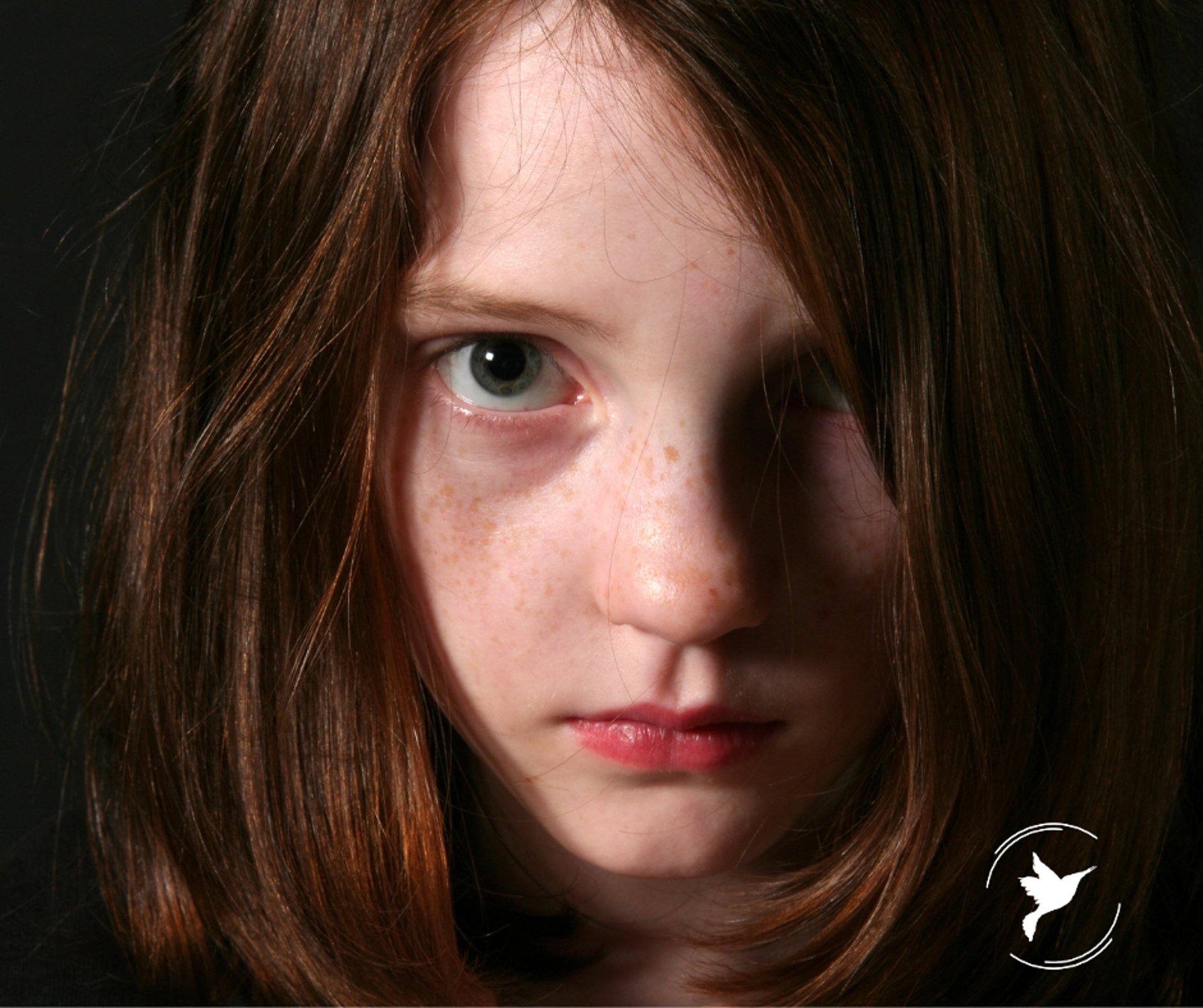
Divorce alone does not damage children.
What leaves marks is the way a parent chooses to handle it — and whether they choose to use the child as a means to an end.
Psychological Resilience
It is the work that needs to happen in this phase of your life.
Separation — whether it leads to divorce or not — is one of the most demanding situations a person can go through. It simultaneously combines emotional crisis, identity shift, practical pressures — and when there are children, parental responsibility that never stops. When so many factors coexist, their impact does not add up — it multiplies.
In this context, psychological resilience is not a luxury. It is a survival need.


You need a space where you can get angry, cry, fall apart safely — so that you can continue standing upright outside of it. You need someone to help you see clearly that your child is not your enemy — they are trapped. They are a victim of a situation they did not choose and do not fully understand.
What you can do — and it is the most powerful thing there is — is to keep living and keep showing up. To protect your mental and physical health. To remain the safe parent — not the perfect one, not the faultless one, but the steady one, the present one, the real one.
This inability to act is not a weakness of character. It is the most exhausting form of parental presence that exists — to be there, steady and calm, while falling apart inside.
This is why counselling is not a luxury in this situation — it is a survival need.
It is not about not feeling the pain. It is about being able to stand beside the pain.
Divorce alone
does not damage children.
What leaves marks is the way
a parent chooses to handle it
— and whether they choose
to use the child as a means
to an end.
Your Child's Rights in Divorce
Every child whose parents are separating has the right:
To be loved and to feel loved by both parents, without feeling guilty
To be protected from the anger and pain that the parents feel towards each other
Not to be caught in the middle — not to be asked to take sides, to carry messages, or to listen to things about the other parent
Not to be burdened with the emotional weight of adults
Not to receive information about the other parent that they cannot process due to age and emotional immaturity
To know about significant changes in their life in advance
To have feelings — and to express them to both parents without fear
To live a life as close as possible to the one they would have had if their parents had stayed together
To be a child
The Risk of Parental Alienation
When separation becomes a weapon — and children pay the price
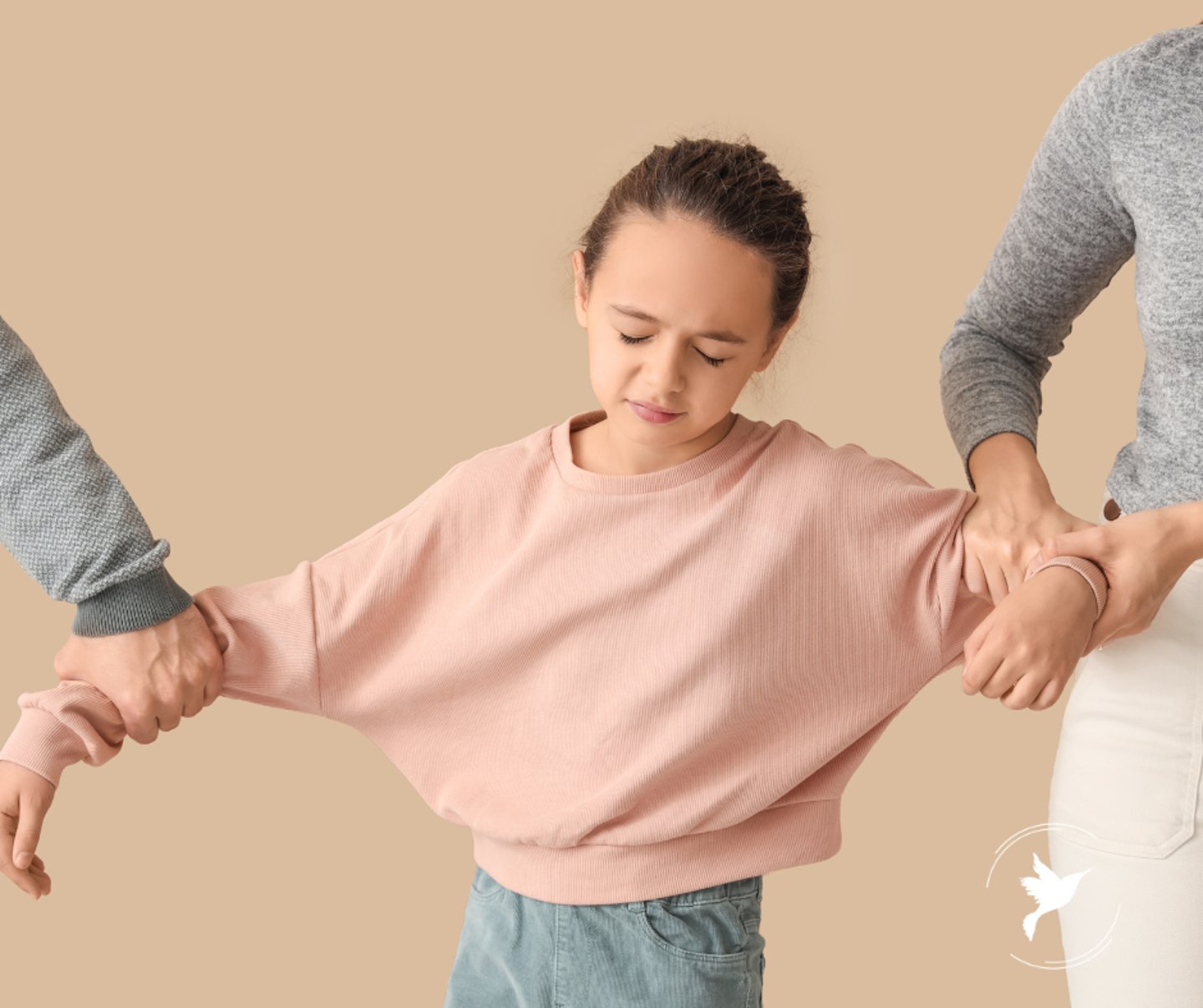

In some cases, separation is not simply a painful transition. It becomes the ground upon which one parent decides — consciously or not — to use the children as a means of revenge, control, or reinforcement.
The alienating parent does not see the child as a separate being with their own needs. They see them as an extension of themselves — as an ally, a messenger, an emotional support for an adult who cannot manage their own pain. Gradually, a child who loved and trusted one parent begins to see them with fear, refuses visits, speaks with words that don't belong to them. They don't do this freely. They do it because they have been taught — quietly, steadily — that this is what is needed.
If you are living this: this is not simply "a difficult phase." It is psychological abuse — of the child. And it deserves to be treated as such.
More >> Parental Alienation

How are you, really?
An AI-powered self-test that gives you
a first, personalised picture of what you're going through.
Anonymously, free, and in a few minutes.
— and why this is the most important thing you can do for your children
When you are in the middle of a divorce, the most human reaction is to want to express it. To talk. To be heard. To not be alone. To not feel that you are the only one carrying this. The problem is when this "someone" is your children.
A parent who projects onto the children the negative feelings they have for the other parent — uses them as emotional outlets for their own need for expression — to get revenge or to feel the narcissism satisfied. It is not always intentional. But the damage is real.


Signs worth watching in yourself:
You speak to your children about the other parent in a way that burdens or biases them.
You cry or express fear and loneliness every time they leave for the other parent.
You feel relief when the child "sides with you" or refuses to go.
You encourage the child to decide whether to see the other parent — as if it is their choice.
You present communication with the other parent as something dangerous or unjustified.
You share information about the other parent that was not requested and does not belong to them.
The rule is simple — and difficult to keep when you are in pain: whatever concerns your relationship with the other parent, stays between you. Whatever concerns the children, you discuss together, age-appropriately, without burdening. When a child acquires excessive power to decide and to control — they are not free. They become more unsafe. Children who exercise control over adults become cynical and pompous — and carry these consequences throughout their lives.
The continuity of the relationship with the other parent is not negotiable. It is not a reward or a punishment. It is the child's right — not the parent's choice. Only a parent who poses a genuine risk to the child's safety justifies limiting contact. Children need both parents — for life — to develop into complete and happy adults.
How Not to Become
an Alienating Parent
How are you, really?
An AI-powered self-test that gives you a first, personalised picture of what you're going through.
Anonymously, free, and in a few minutes.
FAQ
Does coming to counselling mean my marriage is over?
No. Many people come precisely because they want to find a way to continue — and to understand what that would require. Counselling does not make decisions for you. It helps you make them yourself, with clarity and without being governed by the pain of the moment.
Can I come alone or do I need to come with my partner?
Yes, you can come alone. Individual counselling during a family crisis period is a space that belongs exclusively to you — to your feelings, your needs, your decisions. You don't need to be two to begin working on yourself. However, you can bring your partner if you both wish.
I feel like I'm failing as a parent. Is it normal to feel guilty?
Absolutely — and very common. Separation simultaneously brings self-blame that one did not do enough and guilt for how it may affect the children. This guilt is not always a fair reflection of reality. In counselling we work on precisely this — to separate what is genuinely yours from what has been loaded onto you by others.
My family and friends are taking sides or judging me. How do I handle this?
The social environment in a divorce rarely remains neutral. Friends separate, relatives take positions, and this often happens at the moment you have the greatest need for support. In counselling we work on how to manage these dynamics — which relationships are worth protecting, where to set limits, and how not to let others' reactions influence your own decisions.
What happens to the children — how will I know they are being affected?
Children are not affected by the divorce itself, but primarily by the way parents handle it: the conflict, the emotional burdening, the changes in behaviour, problems at school, or conversely excessive "goodness" — can be signs. We can look at this together.
I'm afraid my partner will use the children against me. What can I do?
This fear is well-founded — parental alienation often begins precisely from the dynamics of separation, as a reaction to pain and a need for control. In counselling we work on how to protect your relationship with your children — and how to recognise the signs early.
I feel shame about the divorce — for myself and for the children. Is it normal?
Yes — this is one of the most painful emotions accompanying a divorce — the stigma of divorce remains in many cultural contexts, even silently. Shame does not concern you alone — many parents worry about how the divorce will affect their children in school, in their circles, in their behaviour, in the eyes of others. What needs to be clear is that shame does not reflect the value of a person or a parent. It is a social emotion — not one that comes from within, but from external expectations. In counselling we work precisely on this — to separate what is genuinely yours from what has been loaded onto you by others.
Can a divorce be "good" for the whole family?
When handled with maturity, respect, and child-centredness — and not as a field of revenge — yes. A separation handled with awareness can be the end of a painful phase and the beginning of a more genuine life reality — for you and for your children.

Take the First Step
The first diagnostic session is free.
No commitment required
— just your wish to talk.

Take the First Step
The first diagnostic session is free.
No commitment required
— only your wish to talk.
Lilika Vergi | Trauma-Informed Counselling & Psychotherapy
Based in Greece, I work online with clients worldwide. Sessions are available in English and Greek.
Phone
© 2026 lilikavergi.com. All rights reserved.
Mobile / WhatsApp
Address