


Anxiety & Stress

Anxiety & Stress
When anxiety won't let you breathe and stress has become your permanent companion — it is not weakness. It is a signal asking to be heard.
Anxiety is not your character. It is a response that once protected you — and now will not stop.
How we work together >> MY APPROACH

Your body is listening to what your life is shouting.
When anxiety won't let you breathe and stress has become your permanent companion — it is not weakness. It is a signal asking to be heard.
Anxiety is not your character. It is a response that once protected you — and now will not stop.
How we work together >> MY APPROACH
Anxiety & Stress
In a Nutshell


At a physical level it manifests as:
tension
palpitations
stomach symptoms
insomnia
fatigue that doesn't go away
The therapeutic work includes:
hypervigilance
worry
fear of criticism
avoidance
feeling that "something is not going well"
Chronic anxiety can lead to burnout: deep physical, emotional, and cognitive exhaustion.
It is fed by:
automatic negative thoughts ("it will go wrong")
cognitive distortions
core beliefs ("I am not enough")
old experiences that shaped the way the system responds
Stress is the body's response to pressure. Anxiety is something deeper: a hyperactivation of the nervous system, where the mind and body react as if there is a constant threat — even when there isn't.
If you want to see how the crisis manifests, how it affects you, and how
we work therapeutically,
continue reading below.
At a psychological level:
cognitive restructuring
reduction of avoidance
regulation of the nervous system
psychoeducation on new ways of responding
gradual re-approach of functioning
Anxiety is not weakness. It is a system asking to be heard — and it can calm down.
Anxiety & Stress — In a Nutshell
Anxiety is a hyperactivation of the nervous system, where the mind and body react as if there is a constant threat — even when there isn't. It is fed by automatic negative thoughts, cognitive distortions, and old experiences that shaped the way the system responds.
At a physical level it manifests as tension, palpitations, stomach symptoms, insomnia, and fatigue.
At a psychological level as hypervigilance, worry, fear of criticism, avoidance, and the feeling that "something is not going well."
Chronic anxiety can lead to burnout: deep physical, emotional, and cognitive exhaustion.
The therapeutic work includes cognitive restructuring, reduction of avoidance, regulation of the nervous system, and psychoeducation on new ways of responding.
Anxiety is not weakness. It is a system asking to be heard — and it can calm down.
Anxiety, Stress, Burnout: What Is What — and Why It Matters
Stress is the body's response to something specific that is pressing. When the situation changes, the body gradually calms. A moderate amount is physiological — and even useful.
Anxiety is different. The body remains in a state of internal alertness — like an alarm that never fully switches off, even without a visible cause.
Burnout is what happens when chronic stress has remained too long without a break. Fatigue doesn't go away with sleep. Joy disappears, motivation, the feeling that "it's worth the effort."
All three can coexist — they often feed each other. And all three can be addressed.
Anxiety, Stress, Burnout: What Is What — and Why It Matters
Many people use the words "anxiety" and "stress" as if they mean the same thing. They don't.
Stress is the body's response to something specific that is pressing: a crisis at work, a financial problem, a conflict in a relationship. When the situation changes, the body gradually calms down. A moderate amount of stress is physiological — and even useful.
Anxiety is different. It does not always need a visible cause to appear. The body remains in a state of internal alertness — like an alarm system that never fully switches off, even when there is no real threat.
Burnout — exhaustion — is what happens when chronic stress has remained too long without a break. The body and mind become depleted. Fatigue doesn't go away with sleep. The joy disappears, the motivation, the feeling that "it's worth the effort." It is one of the most common reasons people come to a psychotherapist today — and it is not "laziness" or "weakness." It is a signal that a great deal was given, for too long, without adequate replenishment.
And all three — stress, anxiety, burnout — can coexist. They often feed each other. And all three can be addressed.
How You Learned to Worry
How the Fear System Works
— and Why It Doesn't Stop
Our brain has an ancient alarm system designed to protect us from danger. When it perceives a threat — real or imagined — the body prepares: "fight-flight-freeze." The problem is that this system cannot always distinguish a real danger from a thought, a memory, or a hypothetical situation.
How Automatic Negative Thoughts Form
Over time, the mind develops shortcuts — automatic thoughts that appear without being called: "It will go wrong," "I can't handle it," "Something bad will happen," "It's my fault." They are not truths. They are estimates the mind has recorded as "given" through repetition.


Why your mind won't stop — and it is not your fault
Anxiety is not random. It is a system that learned to function this way — usually for very good reasons, at a specific moment in your life.
How Core Beliefs Form
Deeper still lie core beliefs — deep, almost invisible convictions about yourself, others, and the world. They formed early, through experiences and relationships: "I am not enough," "The world is dangerous," "I cannot trust anyone." When the mind reads a situation through these beliefs, anxiety is not an exaggeration — it is the logical consequence.
And the Good News?
What the mind learned, it can unlearn. The brain has neuroplasticity — the ability to create new connections, new patterns, new ways of interpreting. Not through "positive thinking," but through a gradual, structured process of relearning — which happens within therapy, step by step, safely.
Where Anxiety and Chronic Stress Appear
και τί αλλάζει


The context changes. The internal state stays the same.
Work and Professional Life
Inability to concentrate and continuous "mental mixing." Feeling that "I never do enough" — regardless of what you actually do. Fear of evaluation or criticism. Burnout — the breakdown of motivation and interest for work you once loved.
Relationships and Family
Oversensitivity in others' reactions. Tendency towards conflict or withdrawal — suppression or inability to express. Feeling that you are "too much" for others. Overprotectiveness or emotional detachment.
Generalised Anxiety — Without a Specific Cause
Anxiety appears first thing in the morning, follows you everywhere, changes topic but never leaves. The mind cannot "rest" between worries. This is generalised anxiety — a state of chronic unease where the mind cannot switch off.
How it Manifests
Body
Your neck hurts without reason. You tense up before every phone call. You sleep but wake up exhausted. Your stomach reacts to stressful situations before your mind has processed them.
Thoughts
Your mind won't stop. You run through "what if it goes wrong..." scenarios that will most likely never happen. You think the worst — and this seems logical, even realistic. You re-evaluate conversations, decisions, mistakes constantly.
Emotions
Worry that doesn't go away. Irritability from small things. A vague but persistent feeling that "something is not going well." Guilt that appears even when you have done nothing wrong. Emotional exhaustion.
Behaviour
You avoid situations that would trigger you — this temporarily relieves but reinforces anxiety long-term. You seek reassurance constantly. You postpone decisions out of fear of mistakes. You check things repeatedly.
If you live with some of these, you may recognise something familiar.
How You Learned to Worry
Why your mind won't stop — and it is not your fault
Anxiety is not random. It is not a "bad character" or "excessive sensitivity." It is a system that learned to function this way — usually for very good reasons, at a specific moment in your life.


How the Fear System Works
Our brain has an ancient alarm system — designed to protect us from danger. When it perceives a threat, real or imagined, the body prepares: the heart beats faster, breathing changes, muscles tighten. This is the well-known "fight-flight-freeze" response.
The problem is that this system cannot always distinguish a real danger from a thought, a memory, or a hypothetical situation. So the body reacts in the same way to an email from a supervisor, to a "what if..." thought, or to a memory of a difficult moment.
Over time, the mind develops shortcuts. Instead of evaluating each situation from scratch, it uses patterns it has already learned. These patterns become automatic thoughts — fast, almost invisible, appearing without being called:
"It will go wrong."
"I can't handle it."
"Something bad will happen."
"It's my fault."
They are not truths. They are estimates that resemble truth because you have thought them so many times that the mind has recorded them as "given."
Deeper than automatic thoughts lie core beliefs — deep, almost invisible beliefs about yourself, others, and the world. They formed early, through experiences, relationships, and reactions of people who were important to us:
"I am not enough."
"The world is dangerous."
"I cannot trust anyone."
"I have to handle everything on my own."
When the mind "reads" a situation through these beliefs, anxiety is not an exaggeration — it is the logical consequence.
What the mind learned, it can unlearn. The brain has neuroplasticity — the ability to create new connections, new patterns, new ways of interpreting.
This is not about "positive thinking" or self-confidence from nowhere. It is a gradual, structured process of relearning — which happens within therapy, step by step, safely.
How Automatic Negative Thoughts Form
How Core Beliefs Form
And the Good News?
How We Work Together
— and What Changes
Understanding What Is Happening to You
First we learn together how anxiety works in your own system. What activates the alarm? Where does it sit in the body? How does the mind interpret it? Understanding alone changes something — it stops you feeling that "something is not going well inside you."
Changing the Way You Think
Changing What You Do
We work with the automatic thoughts that feed anxiety — "it will go wrong," "I can't handle it," "everyone will judge me." Not to become "optimistic," but to think more realistically.
Avoidance keeps anxiety alive. Gradual exposure — starting from what is least difficult — is one of the most effective tools we have. We work step by step, at a pace that doesn't overwhelm, to stop anxiety from limiting you.
Anxiety doesn't resolve only through logic. Physical calming is also needed. We work with breathing, grounding practices with the present moment, techniques that help when the system is in hyperarousal.
Calming the Body

How are you, really?
An AI-powered self-test that gives you
a first, personalised picture of what you're going through.
Anonymously, free, and in a few minutes.
How are you, really?
An AI-powered self-test that gives you a first, personalised picture of what you're going through.
Anonymously, free, and in a few minutes.


Body — The Physical Signs
Anxiety and chronic stress don't stay in the mind. They descend into the body and there you usually "see" them first: tension in the neck, shoulders, jaw.
Difficulty falling asleep or staying asleep.
Stomach discomfort without organic cause. Feeling of tightness in the chest, difficulty breathing. Fatigue that doesn't go away with sleep. Palpitations, dizziness, feeling of "fuzziness."
Work and Professional Life


Chronic stress at work is one of the most common reasons people come to psychotherapy. It manifests as inability to concentrate and continuous "mental mixing."
Procrastination followed by exhaustion.
Feeling that "I never do enough" — regardless of what you actually do. Fear of evaluation or criticism. Burnout — the breakdown of motivation and interest for work you once loved.
The context changes. The internal state stays the same.
Where Anxiety and Chronic Stress Appear


Relationships and Family
Anxiety is not only individual. It lives within relationships and is transmitted.
Oversensitivity in others' reactions. Tendency towards conflict or withdrawal — suppression and inability to express. Difficulty trusting. Feeling that you are "too much" for others. Overprotectiveness or emotional detachment.
Generalised Anxiety
— Without a Specific Cause

Sometimes there is no specific "why." Anxiety appears first thing in the morning, follows you everywhere, changes topic but never leaves.
The mind cannot "rest" between worries. This is generalised anxiety — a state of chronic unease that concerns almost everything, without the mind being able to "switch off" between worries.
Πώς εμφανίζεται το άγχος και το χρόνιο στρες
If you live with anxiety or chronic stress, you may recognise some of these:
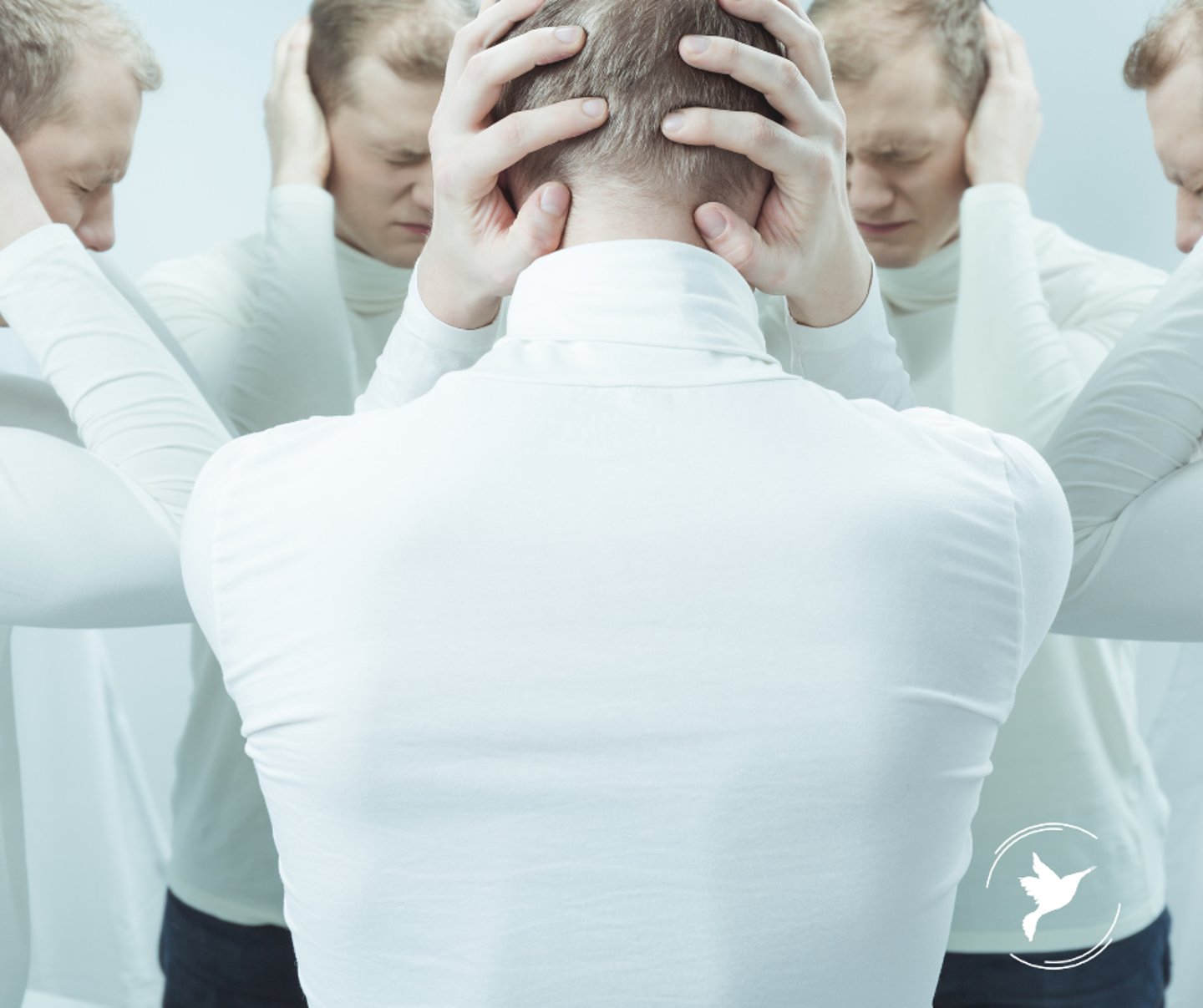

Body: Your neck hurts without reason. You tense up before every phone call. You sleep but wake up exhausted. Your stomach reacts to stressful situations before your mind has processed them.
Thoughts: Your mind won't stop. You run through "what if it goes wrong..." scenarios that will most likely never happen. You think the worst — and this seems logical, even realistic. You re-evaluate and re-analyse decisions, conversations, mistakes constantly.
Emotions: Worry that doesn't go away. Irritability from small things. A vague but persistent feeling that "something is not going well." Guilt that appears even when you have done nothing wrong. Emotional exhaustion.
Behaviour: You avoid situations that would trigger you — and this temporarily relieves but reinforces the anxiety long-term. You seek reassurance constantly. You postpone decisions out of fear of mistakes. You check things repeatedly — your phone, your messages, the door, the oven, yourself.
These are not signs of weakness. They are the logical response of a system that has remained too long in alarm mode.
How We Work Together
Psychoeducation — Understanding What Is Happening to You
The first step is understanding. How does the anxiety cycle work in your own system? What activates the alarm? Where does it sit in the body? How does the mind interpret it?
Psychoeducation is not theory — it is the most immediate form of relief, because when you understand what you are living you stop feeling that you are "going mad" or that you are "different from others."
Addressing anxiety and chronic stress is not about "relaxing" or "thinking positively." It is work — specific, gradual, with tools that are evidence-based.
Cognitive Work — Changing the Way You Think
Anxiety is fed by specific thinking patterns — the so-called cognitive distortions. The most common:
Catastrophising — "it will definitely go wrong."
Overgeneralisation — "this always happens to me."
Reading others' minds — "I know what they think of me."
Dichotomous thinking — "either I handle it perfectly or I am a failure."
We work with recording automatic thoughts, recognising cognitive distortions, and gradually challenging and restructuring them — not to become "optimistic", but to think more realistically.
Avoidance is anxiety's best friend. The more you avoid what frightens you, the more anxiety is confirmed and grows. Gradual exposure — starting from what is least difficult — is one of the most effective tools we have.
We also work with the hierarchy of avoidance situations, the reduction of "safety behaviours" — like excessive control and seeking reassurance — and with techniques for regulating the nervous system: breathing, somatic awareness, grounding.
Anxiety doesn't resolve only through logic. Physical calming is also needed.
We work with techniques for managing hyperarousal, breathing exercises, and grounding practices with the present moment — particularly useful in periods of crisis or before anxiety-provoking situations.
Behavioural Work — Changing What You Do
Emotional Regulation — Calming the System
FAQ
What is burnout and at what point does it need therapy?
Burnout is not simply tiredness. It is a state of deep exhaustion — physical, emotional, and cognitive — that comes from prolonged stress without adequate recovery. When fatigue doesn't go away with breaks, when the joy for things you once loved disappears, when you feel "empty" even after rest — these are signals worth listening to. Therapy is not a luxury at this point. It is a necessity.
Can anxiety become chronic without realising it?
Yes — and this is one of the most common phenomena. The body adapts to chronic stress and anxiety to such a degree that it stops recognising them as a "problem" — and starts considering them "physiological." People often come to therapy for something else — sleep, physical symptoms, relationship difficulties — and in the process discover that the basic underlying issue is chronic anxiety.
When is the right time to seek help?
You don't need to reach a crisis point. If you feel that "something is not going well", that anxiety or stress affects your sleep, your relationships, your work, or the image you have of yourself — that is reason enough to take the first step. There is no "bad enough" as a criterion for deserving support.
How long does therapy for anxiety take?
It depends on the depth and duration of the problem. There is often significant relief in a few sessions — especially when psychoeducation begins and cognitive interventions start. The deeper work — changing patterns, tolerating uncertainty, managing chronic stress — takes time. There is no single answer, because every person is different. This is precisely what we assess together at the start.
What is the difference between anxiety and stress? Do they need to be addressed differently?
Stress is connected to a specific external trigger — work, a relationship, a loss. When the situation changes, it gradually subsides. Anxiety is more internal — the body remains in alarm mode even without a visible cause. In therapy we address both, but with a different emphasis: for stress we work primarily on managing pressure and the "should" schemas; for anxiety we give weight to cognitive restructuring, reduction of avoidance, and regulation of the nervous system.

Take the First Step
The first diagnostic session is free.
No commitment required
— just your wish to talk.

Take the First Step
The first diagnostic session is free.
No commitment required
— only your wish to talk.
Lilika Vergi | Trauma-Informed Counselling & Psychotherapy
Based in Greece, I work online with clients worldwide. Sessions are available in English and Greek.
Phone
© 2026 lilikavergi.com. All rights reserved.
Mobile / WhatsApp
Address